


The Invisible Specialists
Schaffhausen is part of Switzerland’s third-largest pharmaceutical and medtech cluster. The major companies in the cluster are well known. What the statistics don’t show is that, alongside them, a network of highly specialized suppliers has developed that serves the global pharmaceutical and medtech market—and does not appear in any industry statistics.
The figures for the Swiss life sciences sector are impressive. The industry supports approximately 50'000 direct jobs, generates about 250,000 additional jobs, and, together with the medtech industry, accounts for more than half of all Swiss exports of goods. While traditional industries suffered from the strong Swiss franc and volatile markets in the first half of 2026, the life sciences sector once again demonstrated that it is a reliable engine of growth for the entire country.
The Schaffhausen region plays an active role in this: According to Interpharma, the canton - together with Zurich, Zug, and Lucerne - forms Switzerland’s third-largest pharmaceutical and medtech cluster. Among the largest companies is Johnson & Johnson: Founded as Cilag, the company has been present in the region for 90 years, employs around 2'000 people, and has invested well over one billion Swiss francs over the past 25 years. Merck Eprova is equally influential in the region. The renowned company produces highly specialized active pharmaceutical ingredients in Schaffhausen - including reduced folates, a field in which it is a global leader. In total, approximately 3'000 people work directly in the pharmaceutical and medtech industries in the canton. However, the significance of the pharmaceutical and medtech cluster extends far beyond the mere producers of active pharmaceutical ingredients and medical technology and reaches deep into the traditional precision manufacturing industry. When jobs at highly specialized supplier companies are included, the actual number of employees working in the life sciences sector is significantly higher.
Deeply Rooted
In addition to mechanical engineering, tool and mold making plays a major role in Schaffhausen’s economy. Building on the foundation of the regional precision engineering and watchmaking industries—which have made a keen sense of micrometers part of the local DNA - pioneering toolmakers began producing numerous injection molds for medical technology starting in the 1930s. They are part of a successful, highly specialized mold-making and injection molding cluster that stretches from Stein am Rhein to the Klettgau, spanning the entire canton and extending into neighboring regions.
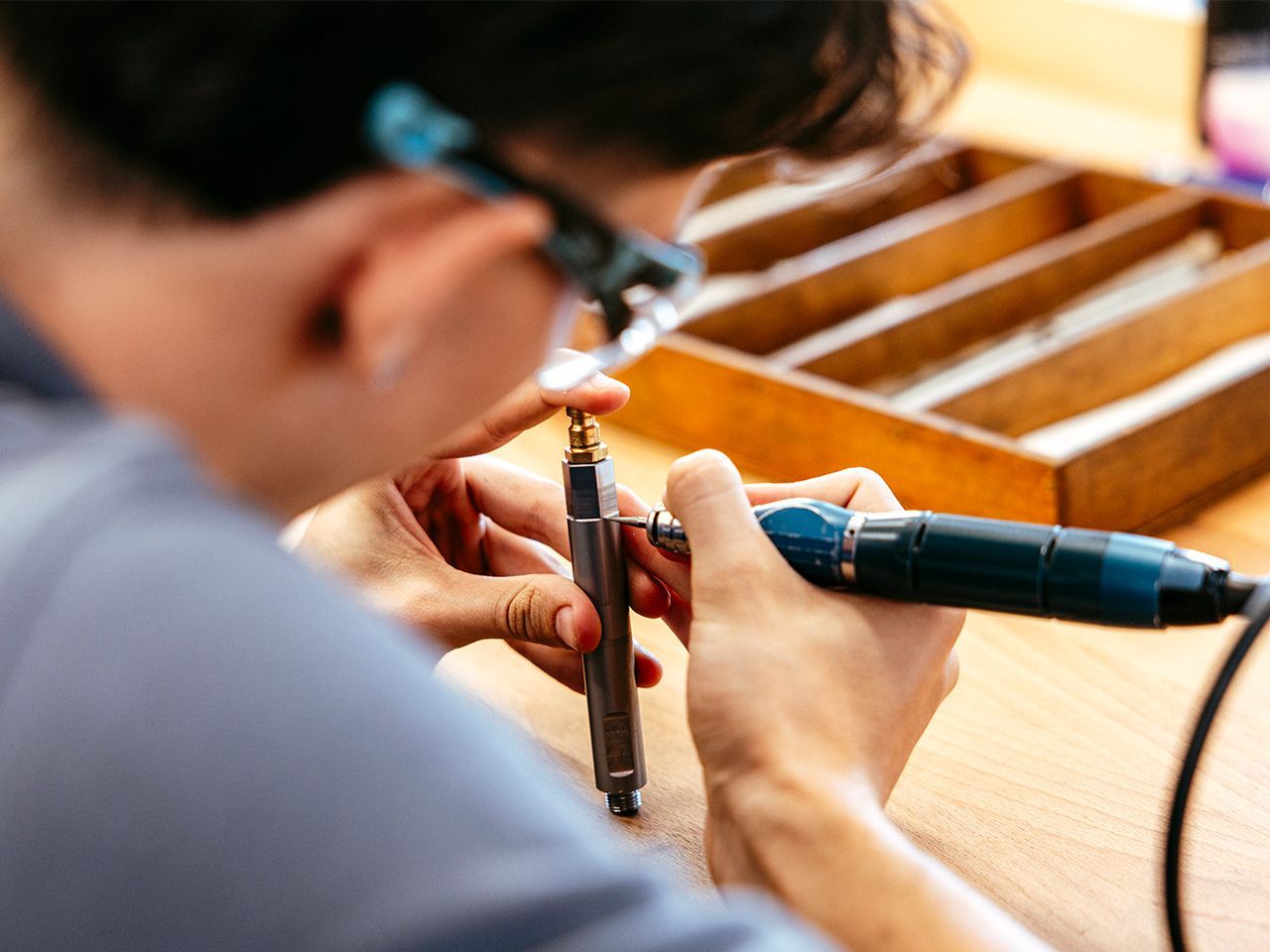
Precision manufacturing companies that have tailored their processes and cleanrooms to the demanding medical technology and pharmaceutical markets appear in economic statistics as toolmakers or MEM companies, rather than as part of the healthcare industry. In practice, however, they manufacture - under strict regulatory requirements - the high-precision tools and micrometer-accurate components without which modern insulin pens, metered-dose nasal sprays, infusion systems, or dialysis filters simply cannot be produced and would not function as reliably as they must. What keeps these companies internationally competitive is process reliability, manufacturing tolerances in the hundredths-of-a-millimeter range, and a level of vertical integration that cannot be easily replicated on the global market. Despite Switzerland’s high labor costs and currency pressures, this enables them to secure their place in global supply chains.
The following pages feature two companies from Schaffhausen that exemplify how this dynamic works in practice: KEBO AG in Neuhaus - with an export rate of over 90 percent - is a highly specialized family-owned business that supplies global pharmaceutical companies directly with complex multi-cavity molds. For several months now, KEBO has also been part of the French Plastisud Group. SMC Mould Innovation AG in Hallau follows a different path: The long-established Klettgau-based company has been part of the global SHL Medical Group since 2024 - as a specialist in injection molds, embedded in a globally integrated value chain.
Innovation as a Forward-Looking Strategy
As a business location, Schaffhausen has long attracted companies primarily with its attractive cost and tax environment. As the tax advantage erodes, the “Schaffhausen” brand must now rely much more heavily on other selling points to win over businesses. Since 2016, the canton has therefore been consistently focused on improving the innovation ecosystem: Strengthening existing industry strengths - materials science, pharmaceuticals & medtech, manufacturing technology, food technology, and building technology - is combined with the promotion of cross-cutting competencies in automation, robotics, artificial intelligence, and circularity. The goal is to create an innovation environment that offers local companies access to key technologies of the future while simultaneously attracting companies and talent from outside the region. Application-oriented centers of excellence are a core element of this strategy.
For the strong Schaffhausen pharmaceutical and medtech cluster, such a center of excellence is being established around the be circular association. The goal is to close the material cycle in the healthcare sector. Be circular brings together companies, academia, and public partners to develop new business models and apply new technologies—with pilot plants for the reuse of materials located directly in the region. Another center of excellence is the Centre for Sustainability Robotics (CCSR), which is being established in collaboration with Empa. The CCSR creates opportunities in Schaffhausen for the application of the latest technologies with local industry partners. Knorri Park is intended to complement the strategy as a Swiss Food Competence Hub in the field of food technology.
The Schaffhausen Canton Economic Development Agency serves as the driving force behind these initiatives. It supports strategic networking within the region as well as with external stakeholders and uses the centers of excellence as magnets to attract new businesses to the region - with the goal of making the region sustainably competitive and future-proof.
There is more


Update newsletter Schaffhausen
Beyond the numbers: context that moves markets. Insights for CFOs, straight from Schaffhausen.

